

Introduction to the Conflict
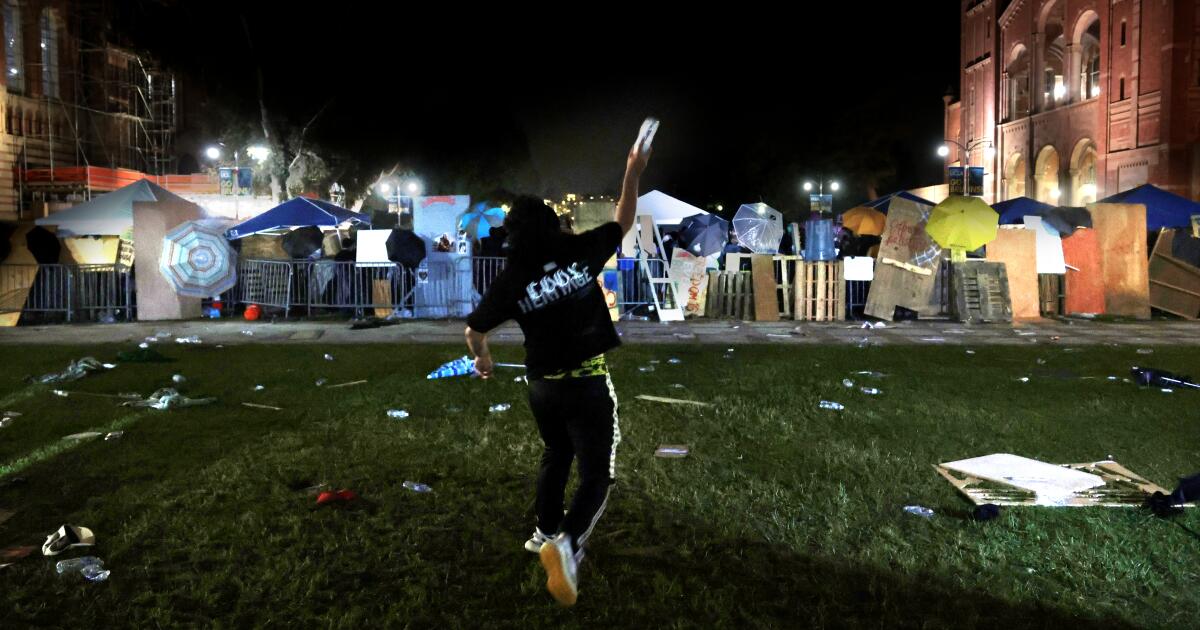
For more than seven months, UCLA has battled in federal court against allegations by Jewish students and a faculty member that the university enabled antisemitic actions during a pro-Palestinian campus encampment last spring. In court filings, lawyers on both sides argued about whether actions in the encampment — which included Jewish student leaders — were antisemitic for blocking pro-Israel or Zionist individuals from using walkways by the camp. Both sides have pointed fingers about who was responsible for the encampment. Was it the university, which did not immediately take it down and whose staff helped reinforce it with metal barriers? Or the protesters who took over a small slice of campus?
Trump Administration’s Involvement
On Monday, the Trump administration waded into the conflict when the Department of Justice filed court documents supporting the right of the students and faculty to sue for discrimination and accusing UCLA of trying to “evade responsibility” for alleged antisemitism. The Department of Justice said the move is the work of a new multiagency federal task force on combating antisemitism. The group previously said it planned to visit UCLA, USC and eight other U.S. campuses. No dates have been announced.
Response from the Department of Justice
“The President, Attorney General Pam Bondi, and the task force know that every student must be free to attend school without being discriminated against on the basis of their race, religion or national origin,” said task force member Leo Terrel, senior counsel to the assistant attorney general for civil rights. “The Department of Justice is working to combat antisemitism using all of the tools at our disposal.”
Reaction from UCLA and Plaintiffs
Mark Rienzi, president of Becket Fund, a nonprofit that is representing the UCLA Jewish plaintiffs, said in a statement that the Trump administration has “thrown down the gauntlet: If university administrators aid and abet mistreatment of Jews, they will pay the price. This is a wake-up call for every university that allows antisemitic hatred to fester unchecked.” In response to the Department of Justice, a UCLA spokesperson said the university was “committed to eradicating antisemitism.”
UCLA’s Commitment
“Chancellor Julio Frenk, who joined UCLA in January, has a strong track record of combating antisemitism and is actively at work to help UCLA achieve our goal of fostering an environment where all members of our community are able to live, work, and learn, freely and peacefully,” Mary Osako, vice chancellor for communications, said in a statement. The university has launched the “Initiative to Combat Antisemitism” to address “our shared, unwavering goal of extinguishing antisemitism.”
Wider Implications
The Trump administration’s decision comes as the University of California, California State University, USC and other California colleges face an onslaught of federal investigations or warnings — from the Department of Justice, the Department of Education and other agencies — over allegations that they have mistreated Jewish students and employees. The administration has threatened to revoke federal funding, including major health and science research grants, from universities that do not, in its view, comply with federal antidiscrimination law. This month, federal authorities cancelled $400 million in grants to Columbia University, accusing it of mishandling pro-Palestinian protests and ignoring alleged incidents of antisemitism.
Criticism and Concerns
Critics accuse the White House of weaponizing concerns over antisemitism to attack campus free speech and say the administration is inaccurately painting pro-Palestinian protests as antisemitic. They point out that while the White House pays deep attention to Jewish campus communities, it has had little to say about other religious and racial groups, including Muslims and Arab Americans, who have also reported increases in campus hate incidents in the wake of the Oct. 7, 2023, Hamas attack on Israel, which triggered Israel’s war in Gaza.
Campus Reactions
On Tuesday, dozens of Jewish UCLA faculty members sent a letter to the university’s administration calling on leaders to resist “any attempt by government officials to harm pro-Palestinian students, staff or faculty who run afoul of the current McCarthyite dictates of the Trump administration.” More than 150 students on Tuesday also held a protest outside the regents meeting, calling on the system to divest investment holdings connected to weapons companies and Israel. A student speaker from Graduate Students for Justice in Palestine accused the regents of “using Trump’s threats as a pretext” to clamp down on free speech rights and anti-war actions.
Conclusion
The ongoing conflict at UCLA reflects a broader national debate about free speech, discrimination, and the role of universities in addressing these issues. As the court case continues and the Trump administration’s task force on combating antisemitism moves forward, the situation at UCLA and other campuses will likely remain a focal point in this discussion. The university’s response to allegations of antisemitism and its efforts to balance free speech with student safety will be closely watched, both by the federal government and by the campus community.
FAQs
- Q: What is the basis of the lawsuit against UCLA?
A: The lawsuit alleges that UCLA enabled antisemitic actions during a pro-Palestinian campus encampment last spring by not immediately taking it down and by helping reinforce it with metal barriers. - Q: How has the Trump administration become involved in the conflict?
A: The Department of Justice filed court documents supporting the right of the students and faculty to sue for discrimination and accusing UCLA of trying to “evade responsibility” for alleged antisemitism. - Q: What is UCLA’s response to the allegations and the Trump administration’s involvement?
A: UCLA has stated its commitment to eradicating antisemitism and has launched the “Initiative to Combat Antisemitism.” The university argues that its actions were focused on safety and de-escalating tensions, not discriminating against Jewish people. - Q: What are the wider implications of this conflict for universities and free speech?
A: The conflict reflects a broader national debate about free speech, discrimination, and the role of universities in addressing these issues. The Trump administration’s actions may have implications for how universities balance free speech with student safety and how they respond to allegations of discrimination.

