

Introduction to a Legacy of Intervention
For over 175 years — ever since the United States conquered half of Mexico — nearly every president has messed with Latin America while telling the rest of the world to stay the hell out. We have helped depose democratically elected leaders and propped up murderous strongmen. Trained death squads and offered bailouts to favored allies. Ran economic blockades and encouraged American companies to treat the region’s riches, and its workers, like a cookie jar.
Historical Precedents
From the Mexican American War to the Bay of Pigs invasion, the Panama Canal to NAFTA, we’ve only looked out for ourselves in Latin America even while wrapping our actions in the banner of benevolence. It’s rarely ended well for anyone involved — especially us. Many of the leaders we put into power became despots we tolerated until they ran their course, like Panama’s Manuel Noriega. The political upheaval we helped create has led generations of Latin Americans to migrate to el Norte, fundamentally changing our country even as too many Americans think people like my family should have stayed in their ancestral homes.
Trump’s Invasion of Venezuela
So there Trump was at Mar-a-Lago on Saturday, insisting that the capture of Venezuela dictator Nicolás Maduro and his wife by American troops was a military action as brilliant and consequential as D-day. He also announced that the U.S. would “run the country” and practically jiggled out his weird “YMCA” dance at the idea of making money from Venezuelan oil. His message to the world: Venezuela is ours until we say so, just like the rest of Latin America. And if allies and enemies alike still didn’t get the hint, Trump announced an updated Monroe Doctrine — the idea that the U.S. can do whatever it wants in the Western Hemisphere — called the “Donroe Doctrine.”
Marco Rubio: The Biggest Sellout
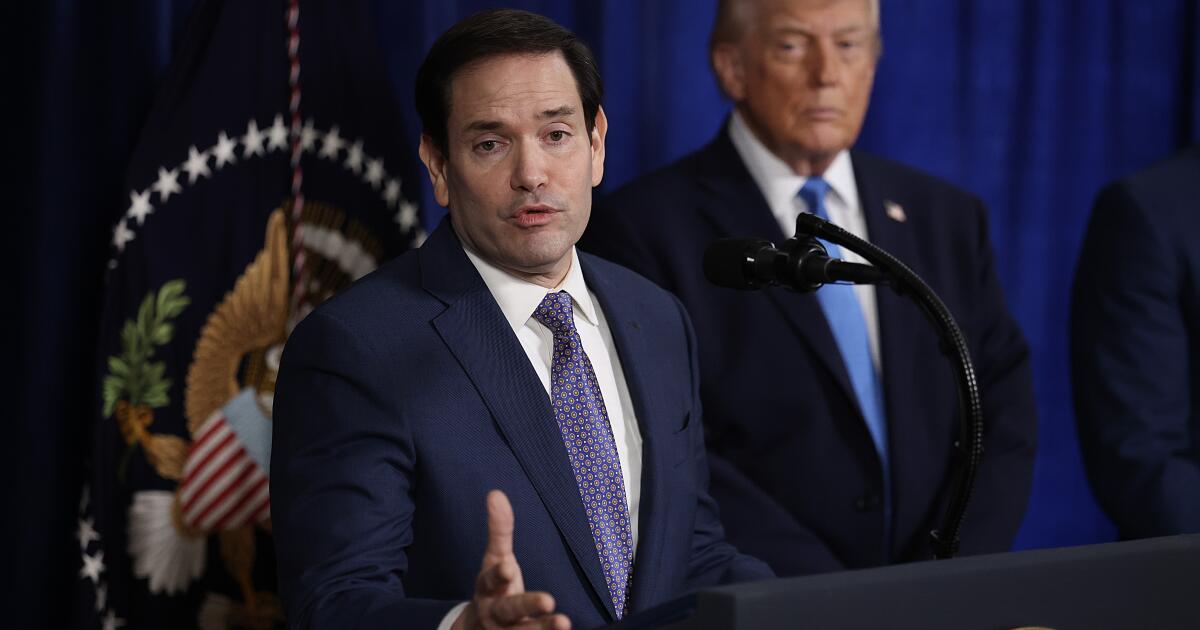
No one in Washington should be more versed in this terrible history than Secretary of State Marco Rubio, the child of Cubans who fled the island when it was ruled by the U.S.-backed caudillo Fulgencio Batista. Rubio grew up in an exile community that saw Batista’s replacement, Fidel Castro, remain in power for decades, despite a U.S. embargo. As one of Florida’s U.S. senators, Rubio represented millions of Latin American immigrants who had fled civil wars sparked by the U.S. in one way or another. Yet he’s Trumpworld’s biggest cheerleader for Latin American regime change, helping torpedo the president’s anti-interventionist campaign promise as if it were a narco boat off the South America coast.
The Legacy of Vendidos
In Latin America, few are more reviled than the vendido — the sellout. Betraying one’s country for personal or political gain is an original sin dating back to the tribes who aligned with Spanish conquistadors to take down repressive empires, only to suffer the same sad end themselves. Vendidos have dominated the region’s history and stilted its development, with leaders — Mexico’s Porfirio Diaz, the Somozas of Nicaragua, Rafael Trujillo in the Dominican Republic — more than happy to side with the yanquis at the expense of their own countrymen. Rubio belongs to this long, sordid lineup — and in many ways, he’s the worst vendido of them all.
The Thirst for Power
I still remember the fresh-faced, idealistic guy trying to pass a bipartisan amnesty bill in 2013. Though too right-wing for my taste, he seemed like a Latino politician who could thread the needle between liberals and conservatives, gringos and us. It was wonderful to see him call out Trump’s boorishness when the two ran against each other in the 2016 Republican presidential primary. He told CNN’s Jake Tapper, in words that sound more prophetic than ever, “For years to come, there are many people… that are going to be having to explain and justify how they fell into this trap of supporting Donald Trump because this is not going to end well, one way or the other.” The thirst for power has a way of corrupting even the most idealistic hearts, alas. Rubio ended up endorsing Trump in 2016, supporting Trump’s claims that the 2020 election was rigged and proclaiming at the 2024 Republican National Convention that Trump “has not just transformed our party, he has inspired a movement.”
Conclusion
Rubio’s reward for his boot-licking? He sets our foreign policy agenda, which is like putting an arsonist in charge of a fireworks stall. By pushing Trump to run rampant over Latin America, you’re setting in motion the same old song of U.S. meddling that ties your family and mine. By letting Maduro’s cronies remain in power if they play along with you and Trump, even though they stole an election in 2024, proves you’re as much for the Venezuelan people as, well, Maduro. Vendido.
FAQs
Q: What is the historical context of U.S. intervention in Latin America?
A: The U.S. has a long history of intervening in Latin America, dating back to the Mexican American War, and has often prioritized its own interests over the well-being of the region.
Q: What is the significance of the Monroe Doctrine?
A: The Monroe Doctrine is a policy that asserts the U.S. can do whatever it wants in the Western Hemisphere, and its updated version, the “Donroe Doctrine,” is an extension of this idea.
Q: Why is Marco Rubio considered a vendido?
A: Marco Rubio is considered a vendido because he has prioritized his own political gain and the interests of the U.S. over the well-being of the Latin American people, particularly in his support for Trump’s regime change policies in Venezuela.
Q: What are the implications of U.S. intervention in Venezuela?
A: The implications of U.S. intervention in Venezuela are far-reaching and could lead to further instability and suffering for the Venezuelan people, as well as a continued legacy of U.S. meddling in the region.

