
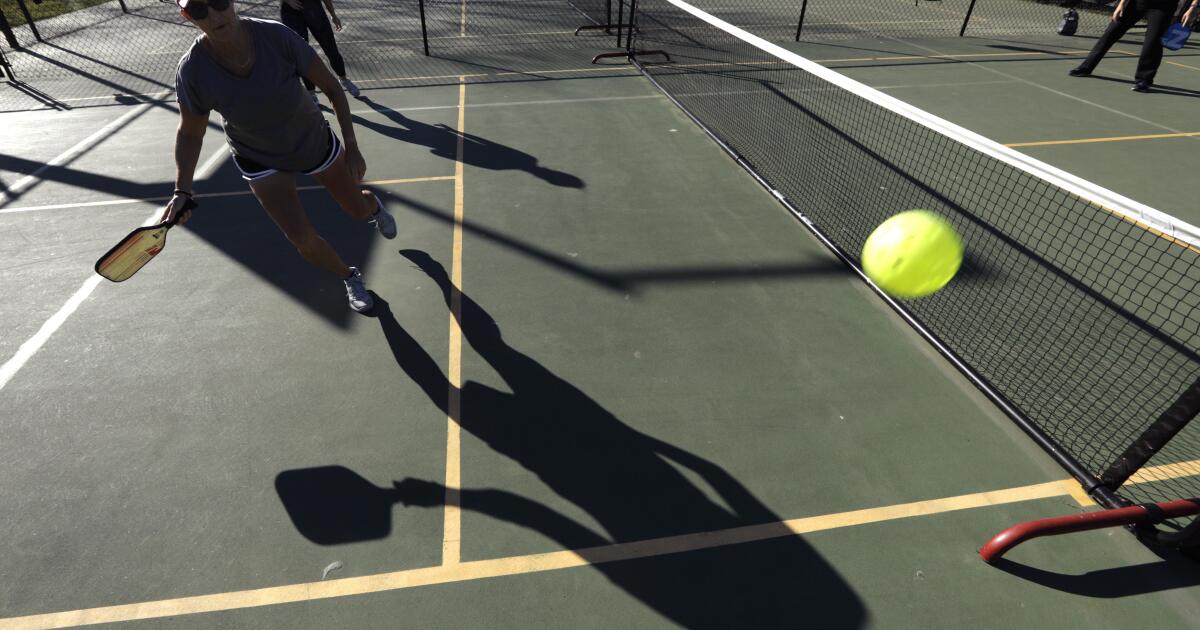

Introduction to the Pickleball Ban
The constant pop pop pop of the plastic ball was simply too much to take.
Kimberly Edwards, who lives near the tennis-turned-pickleball courts at Forest Hill Park in Carmel-by-the-Sea, could hear the resonant sound everywhere she turned — outside in her garden, even through her bedroom window.
“It is very annoying,” she told the City Council last month. “And unless you live there I know it’s not a problem for you, but it’s a problem for me.”
After years of resident complaints, Carmel-by-the-Sea recently became the first California city to ban pickleball at public facilities. The sport, which blends elements of tennis, badminton and ping pong, has exploded in popularity over the past decade, with many cities opting to build or retrofit their public courts to accommodate crowds of paddle-packing enthusiasts.
The Rise of Pickleball and Its Noise Issues
But the sport’s astonishing rise has created an unbearable racket for some nearby neighbors.
Pickleball players say there’s a certain satisfaction that comes from the thwack of a well-struck ball. But neighbors don’t always share the same affinity. Battles over the noisy sport have raged across the country for years, prompting some cities to intervene.
In Laguna Beach, city officials adopted an ordinance this year requiring pickleball players to switch to quieter paddles or face a citation. In the Silicon Valley city of Saratoga, officials set aside $100,000 for efforts to tone down the volume at its pickleball courts.
Efforts to Mitigate Noise Pollution
In a lawsuit against Newport Beach in 2016, a Corona del Mar woman claimed the sounds of people playing pickleball 100 yards from her home caused her “severe mental suffering, frustration and anxiety.” The city responded by limiting hours of play and installing sound-dampening materials at the nearby court.
Officials in Denver implemented sound-dampening pickleballs to keep noise down at their public courts.
Researchers say that the sound of a solid pickleball being hit can be 20 decibels louder than the loudest tennis racket strike. It’s an “impulsive” sound — more like a car backfiring than everyday background noise — that Nalini Lasiewicz, who runs a nonprofit called Pickleball Noise Relief, calls an “acoustical assault.”
“Pickleball is the first major noise pollution to hit the suburbs,” she said.
The Decision to Ban Pickleball in Carmel-by-the-Sea
For the past two years, officials in Carmel have wrestled with how to keep pickleball while reducing the effects for those living adjacent to the courts in Forest Hill Park. They limited the hours of play and considered mandating that players use quieter “librarian foam” balls. They considered a sound wall, but other communities have found such measures to be less than effective.
In October, Carmel city officials temporarily banned pickleball at the only public courts in the city while they studied what else could be done to balance people’s love of the game with residents’ demands for peace and quiet.
Councilman Bob Delves describes the local pickleball saga as a beautiful and ultimately tragic story.
Years ago, a small group of residents over 50 picked up the game and approached the city to see if they could purchase a net and play at Forest Hill Park. Then the COVID-19 pandemic hit, and the game became more popular than ever.
The Impact of the Ban
Suddenly, there were more than a few pickleball players making a ruckus at the park.
And pickleball isn’t just picking up in Carmel. A Sports & Fitness Industry Assn. report said that 19.8 million people played pickleball in 2024, a 45.8% increase from the year prior.
“We had scores of people coming to that little court to play. It’s very much a beach town in a forest, and it just kind of turned into a madhouse,” Delves said. “And then the neighbors rightly said, ‘This is too much.’ So for the last two years there’s been an ongoing conversation about what to do about it, how to regulate it and, in the end, the neighbors had enough.”
This month, the council moved to permanently ban pickleball, directing staff to come back with an ordinance in December that will cement the prohibition. Officials had considered a compromise that would require people to use city-provided quiet balls, but ultimately, officials said it would probably just cause more issues.
Conclusion
The city doesn’t have a dedicated recreation department and, with a staff of about 100 people, trying to regulate the activity would be unnecessarily cumbersome, Delves said.
“Tennis basically consumes zero time and expense… and, unfortunately, the reality of pickleball is that it’s created a significant distraction for the five of us [council members] and for the city. And it’s expending resources that we don’t have. It’s time to just stop,” he said during the council meeting this month.
Pickleball players have lamented that Carmel is the only city on the Monterey Peninsula that doesn’t offer public pickleball courts, reducing access to a sport that has connected people from a variety of athletic levels. The game’s low barrier to entry has made it popular among children and retirees alike.
FAQs
Q: Why did Carmel-by-the-Sea ban pickleball at public facilities?
A: The city banned pickleball due to complaints from residents about the noise level of the game, which was disturbing their peace and quiet.
Q: What efforts were made to mitigate the noise pollution before the ban?
A: The city considered limiting hours of play, mandating quieter balls, and installing sound-dampening materials, but ultimately decided to ban the game.
Q: How many people play pickleball in the US?
A: According to a Sports & Fitness Industry Assn. report, 19.8 million people played pickleball in 2024, a 45.8% increase from the year prior.
Q: What is the impact of the ban on pickleball players in Carmel-by-the-Sea?
A: The ban reduces access to public pickleball courts for players in the city, who will have to find alternative locations to play.

