

Houston Police Department to Destroy Tons of Unneeded Narcotics Evidence
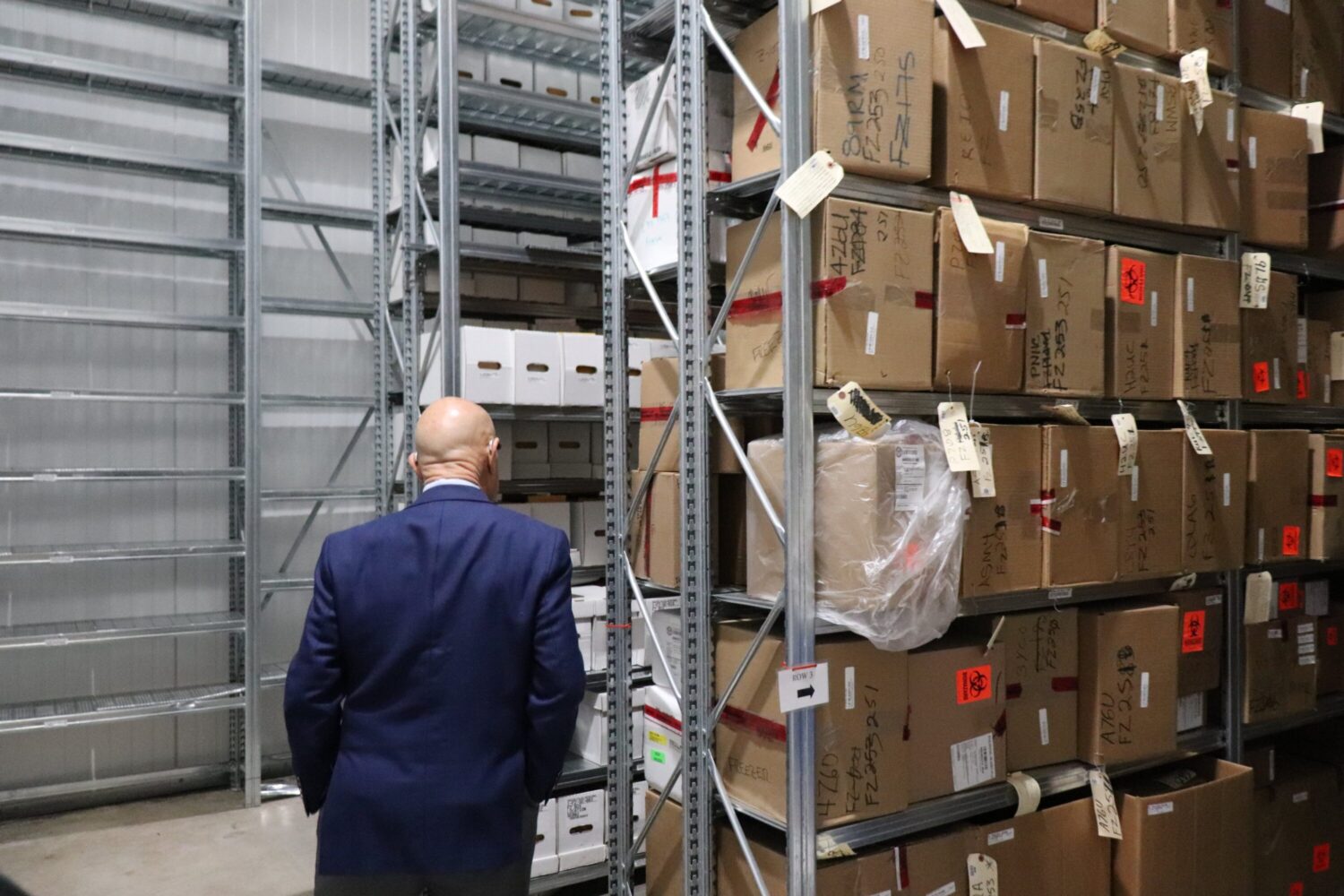
Houston Mayor John Whitmire surveys a Houston Police Department evidence room.
An infestation of "drug-addicted rats" in evidence rooms will prompt the Houston Police Department (HPD) to begin destroying hundreds of thousands of pounds of unneeded narcotics evidence, officials said.
The Problem with Evidence Storage
Around 400,000 pounds of marijuana sits in the department’s property room — and only the rats are enjoying it, according to Houston Mayor John Whitmire. "The problem has been so much evidence is kept and stored that is no longer needed that has no impact on the resolution of that charge, that conviction or even that innocence," Whitmire said Friday.
New Policy to Allow Destruction of Older Evidence
Under the department’s recent protocol, HPD is not allowed to destroy narcotics evidence if it has been in the department’s possession since 2005 — regardless of whether the case has been dismissed, an individual is being convicted and already finished their term, or if the case does not even have a defendant, Harris County District Attorney Sean Teare said. A new policy from the district attorney’s office will allow items older than 2015 to be destroyed.
The Property Room Backlog
The property room contains a backlog of thousands of pounds of evidence that is no longer needed, including notes from a homicide that occurred in 1947, and kilos of cocaine from the 1990s. The district attorney’s office will utilize its own funds to help the city’s police department with the costly process of destroying evidence.
The Challenge of Destroying Evidence
"This is a problem for property rooms everywhere in the country," Peter Stout, president of the Houston Forensic Science Center, said during a Friday news conference. "Rodents, bugs, fungus, all kinds of things love drugs." The police department first learned of the rat infestation in October of last year. "They have had professional exterminators involved, but this is difficult getting these rodents out of there," Stout said. "I mean, think about it, they are drug-addicted rats. They’re tough to deal with."
New Position to Facilitate Destruction Process
The DA’s office also created a new position to facilitate the process — a senior attorney — who will act as a liaison by obtaining destruction orders for the police department, Teare said. The items slated for destruction are pieces of evidence from inactive cases, or cases in which a defendant has already been prosecuted or finished serving out an entire sentence.
Conclusion
The Houston Police Department’s decision to destroy unneeded narcotics evidence comes as a result of a rat infestation in the property room. The department’s protocol has been to keep evidence that is no longer needed, but this has led to a backlog of thousands of pounds of evidence that is no longer necessary. The district attorney’s office will utilize its own funds to help the police department with the costly process of destroying evidence.
Frequently Asked Questions
Q: Why is the Houston Police Department destroying evidence?
A: The department is destroying evidence that is no longer needed and has no impact on the resolution of a case.
Q: How much evidence is being destroyed?
A: Over 400,000 pounds of marijuana is being destroyed, as well as thousands of pounds of other evidence.
Q: Why are the rats attracted to the evidence?
A: Rats are attracted to the drugs in the evidence, and they are difficult to remove once they have infested the area.
Q: What is being done to prevent future infestations?
A: The police department is working to improve ventilation and sanitation in the property room to prevent future infestations.
Q: How much will it cost to destroy the evidence?
A: The district attorney’s office will utilize its own funds to help the police department with the costly process of destroying evidence.