
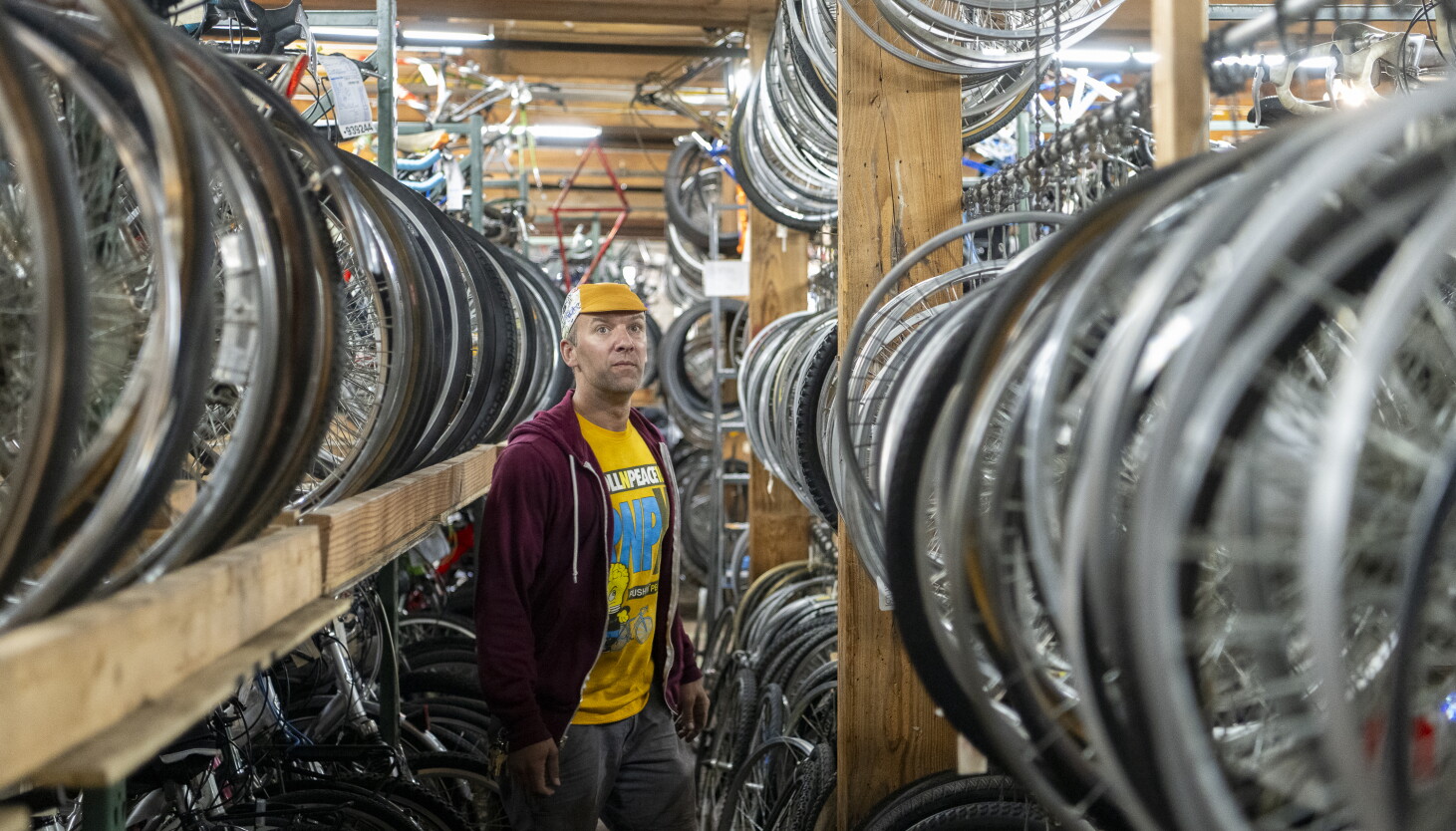

Working Bikes fixes Chicago’s broken bicycles to donate to developing countries
From Scrappy Beginnings to Global Impact
For years, Chicago’s broken and abandoned bikes went to scrapyards to be melted down and recycled.
But for the past quarter-century, a Chicago nonprofit has collected and shipped thousands of bikes overseas to developing countries, helping thousands of people living in poverty.
Costa Rica, Sierra Leone, Zambia, Malawi, El Salvador, Ghana.
Little Village-based Working Bikes has been shipping to these countries and others in Africa and Latin America, delivering more than 150,000 bikes since 1999.
The nonprofit is celebrating its 25th anniversary as its founders look back on growing the company from a scrappy group of volunteers who stashed the bikes in garages and basements. The group now has 20 employees and about 1,000 volunteers, and it is largely self-funded through bikes it repairs and sells in Chicago.
A World of Change
“For $20 shipping, we can send a bicycle to the poorest person on the planet,” said Lee Ravenscroft, 73, who founded Working Bikes with his wife, Amy Little.
Working Bikes packs about 550 bicycles in each shipping container. The bikes are not rideable when they’re shipped. However, the group makes sure the bikes are repairable by the philanthropic groups receiving them. The bikes also provide livelihoods for the mechanics in the receiving counties.
The groups in those countries then sell the bikes for about $70 each, according to Working Bikes executive director Trevor Clarke.
“That can be a lot for people making $200 a year,” Clarke said, adding that some groups have creative ways to help people finance the bikes. The Malawi-based nonprofit Africycle, for instance, offers microloans that can be paid off in four to five months.
A Path of Sustainability
The majority of Working Bikes’ bicycles, about 70%, are sent out of the country, he said. A smaller portion is donated to people in the Chicago area. And about 10% are refurbished and sold locally at its Little Village shop to help pay for the nonprofit’s other work.
The funding sets Working Bikes apart from many nonprofits. It doesn’t rely on large donors or grant writers. Most of the nonprofit’s board volunteers at the bike shop.
“That’s something we’re very proud of. We’re not surviving hand-to-mouth from foundations,” said Working Bikes board president Dave Gorman.
Thousands of Bikes Waiting for a Second Chance

A Look Back at the Beginning
Working Bikes began in 1999 when Ravenscroft and Little saw a problem with an obvious solution.
The couple had volunteered in Latin America and Africa in the 1980s and recognized the value of bikes to people in those countries. Bikes used for recreation in Chicago were a source of livelihood in another country. Bikes could be a tool to expand someone’s horizons beyond their village.
Bikes were especially useful to people outside of cities. “The way poor people get around in rural areas, bikes are hegemonic,” Ravenscroft said.
He first asked nonprofits doing similar work in other cities — Bikes not Bombs in Boston and Pedals for Progress in New Jersey — to expand to Chicago.
“They had their hands full,” Ravenscroft said. He remembers thinking, “We’re going to have to do this on our own.”
Ravenscroft collected the first bikes at scrapyards around Chicago. He would show up before dawn once a week and buy all of their bicycles for $5 each.
“I started collecting bikes and putting them on any vehicle headed south to Central America,” he said.
He partnered with a group, Pastors for Peace, and gave them bikes to put on their caravans.
The group sent their first shipment of 400 bikes to Nicaragua, Little said.
The operation kept growing as Working Bikes partnered with bicycle shops that supplied them with broken bicycles.
“Pretty soon we had a basement full of bicycles,” Little said. The couple moved the bikes to a garage, then a six-flat she owned in Pilsen. After moving around to larger and larger places, Working Bikes settled in a building at 2434 S. Western Ave., where it remains today.
Still Growing
The business quickly grew from a “seat-of-your-pants” operation, as Little put it, where everyone volunteered, to a larger nonprofit with paid employees. The nonprofit matured when it hired an executive director to manage day-to-day operations, Little said.
Clarke has filled that role for a few years. He helps oversee the volunteer program and Working Bikes shop, where the group sells refurbished bicycles to help fund their shipping program. Those bikes sell for an average of $275, Clarke said.
Bikes that aren’t shipped to other countries or sold in the shop are donated to local groups that get them to needy people in the Chicago area.
Dozens of Bikes Lined Up for Sale

Aaron Brown, a 20-Year-Long-Term Employee

Conclusion
Working Bikes is a shining example of a successful social enterprise that has made a significant impact in the lives of thousands of people around the world. With its 25-year history, the organization has become a beacon of hope for those in need of a reliable and affordable mode of transportation. Its commitment to sustainability, community engagement, and social responsibility has made it an inspiration to many.
FAQs
Q: How does Working Bikes collect and distribute its bicycles?
A: Working Bikes collects broken bicycles from Chicago’s scrapyards and partners with local bicycle shops to supply them with broken bicycles. The organization then repairs and refurbishes the bikes and distributes them to developing countries.
Q: How does Working Bikes fund its operations?
A: Working Bikes is self-funded through the sale of refurbished bicycles at its shop and the shipping program.
Q: Who is eligible to receive bicycles from Working Bikes?
A: Working Bikes provides bicycles to people living in developing countries and those in need of transportation in the Chicago area.
Q: How can I get involved with Working Bikes?
A: You can volunteer at one of Working Bikes’ three workshops, donate a bike, or support their mission by shopping at their store.
Q: How do you measure the success of Working Bikes?

