

Introduction to the Situation
Stay calm and respectful, but know your rights. Carry your student ID card at all times. Avoid unnecessary risks. These are just some of the tips University of Illinois Chicago officials recently sent students in preparation of President Donald Trump’s administration deploying hundreds of federal agents or even National Guard troops to the Chicago area, similar to recent federal actions in Los Angeles and Washington, D.C.
University Response to Increased Enforcement
“We understand these developments may cause concern,” wrote a UIC vice chancellor and the UIC police chief in a Sept. 2 message. “Our priority is ensuring that every student, faculty, staff, patient and visitor feels supported, respected and safe on campus.” Immigration enforcement appears to be ramping up this week, creating yet another tightrope that Chicago-area universities have to walk under the Trump administration as they try to support their students without drawing the president’s ire. Less than a year into his second term, the president has slashed federal research funding for universities, threatened further cuts to schools that maintain diversity, equity and inclusion initiatives and targeted international and immigrant students with visa revocations and detention. A few colleges, including Northwestern University, have had hundreds of millions of dollars in federal funding frozen over allegations that they have not done enough to protect Jewish students.
Impact on Universities and Students
Many universities in the area serve large groups of immigrant students and students of color. The presence of federal immigration agents near or even on their campuses — and the possible deployment of the National Guard in their communities — could disrupt their educational mission. President Trump has said he wants to help fight crime in Chicago, which is at historic lows. But local leaders like Governor JB Pritzker say the move — and Trump’s rhetoric — amounts to a declaration of war on the city.
Preparations by Local Colleges
WBEZ reached out to local colleges to see how they are prepping their students and how campus officials will interface with federal agents, including those with U.S. Immigration and Customs Enforcement and U.S. Customs and Border Protection. Several of the campuses, including UIC, Northwestern University and the University of Chicago, have their own police forces. Under a state law implemented in 2017 known as the Trust Act, state and local law enforcement, including campus police at both public and private universities, cannot cooperate with federal immigration enforcement. However, none of the universities disclosed how administrators at their campuses interact with federal immigration authorities.
Specific Guidance from Universities
DePaul University officials referred WBEZ to a campus communication sent last week noting that leaders at the private university are monitoring the situation and staying in touch with local and state authorities. “We recognize that the news about increased immigration enforcement and potential National Guard deployment may create uncertainty for many in our community,” DePaul’s president and provost wrote, adding that campus operations will continue as planned. “We would like to reaffirm that the safety and well-being of our students, faculty, and staff is paramount.” Immigration authorities are only allowed into DePaul’s campus buildings that are accessed by university-issued ID — such as residence halls and classrooms — if they have a signed warrant, according to an FAQ posted on DePaul’s website. If an agent requests access, students are instructed to call the university’s general counsel and the campus Public Safety Department.
University of Illinois Chicago’s Guidance
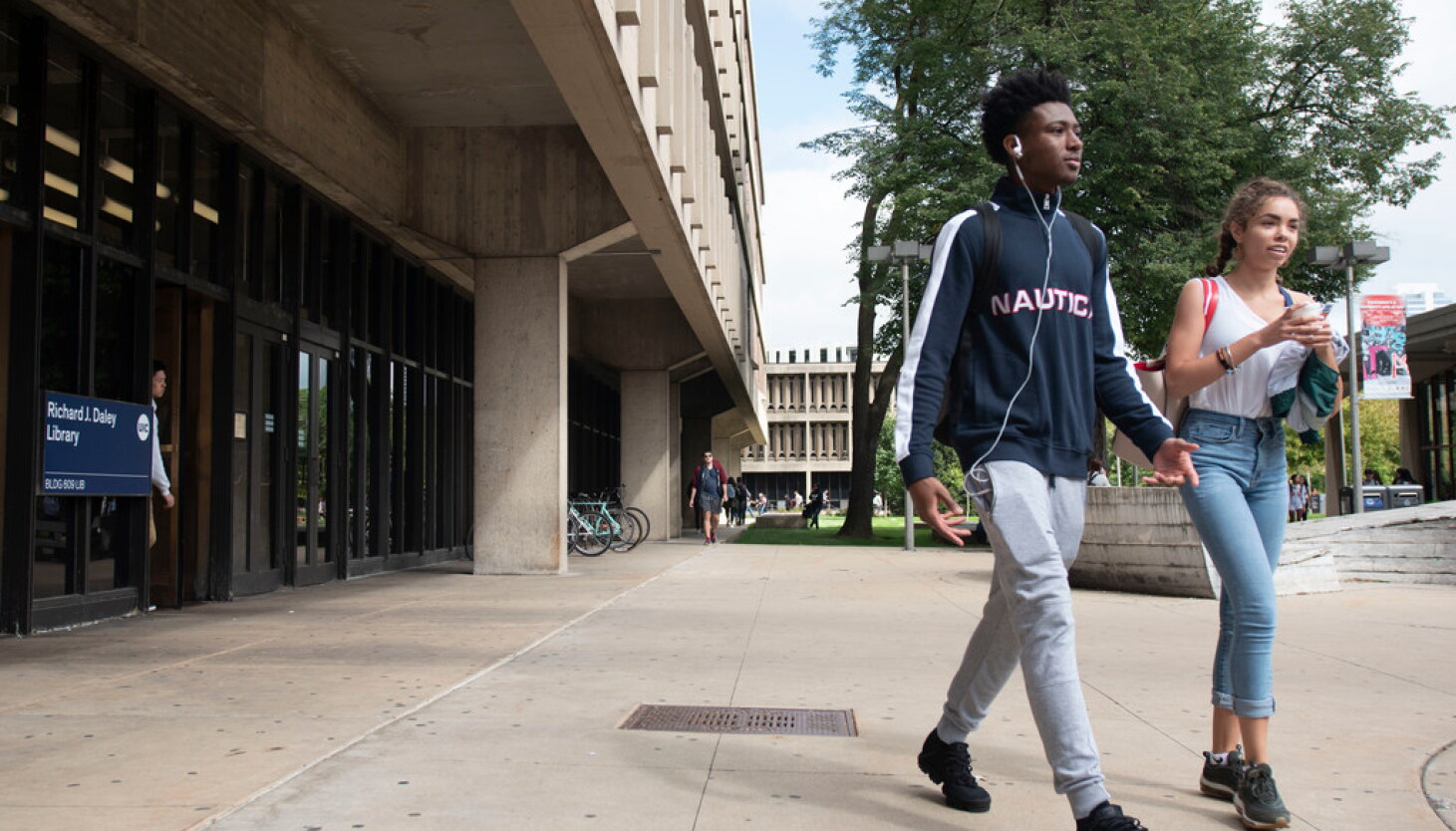
The University of Illinois Chicago cited its Sept. 2 digital communication and the university’s Know Your Rights webpage, which instructs students and staff to notify campus police of the presence of federal officers, and not to accept documents from federal agents and to instead direct them to campus police. UIC is Chicago’s largest university. It serves more than 33,000 students, a majority of whom are students of color. Eight percent come from other countries. UIC students and staff should refer requests from federal law enforcement to UIC Police, according to guidance sent by university officials. International students and faculty who have an immigration-related emergency are advised to contact the Office of International Students at 312-996-3121 during business hours, or 312-415-0334 after hours.
Additional Precautions
UIC’s Office of International Students has published additional guidance advising students to carry digital and physical copies of their immigration documents and to be mindful of their social media presence, noting the U.S. Department of Homeland Security has started scanning the accounts of visa holders for “antisemitic activity” and “the physical harassment of Jewish individuals.” Critics of the policy warn that federal agents may flag statements supporting Palestine and Gaza.
Conclusion
In conclusion, local colleges are taking steps to prepare students for increased federal immigration enforcement, emphasizing the importance of knowing one’s rights and staying calm. Universities are also working to ensure campus safety while navigating complex federal policies and laws. As the situation continues to evolve, it is crucial for students, faculty, and staff to remain informed and aware of their rights and the resources available to them.
FAQs
Q: What should I do if I encounter federal immigration agents on campus?
A: According to university guidance, you should notify campus police and not accept documents from federal agents.
Q: Can federal immigration authorities enter campus buildings without a warrant?
A: No, they need a signed warrant to access buildings that require a university-issued ID.
Q: What should international students do in case of an immigration-related emergency?
A: They should contact the Office of International Students during business hours or the emergency number after hours.
Q: Why are universities taking these precautions?
A: To ensure student safety and well-being in response to increased federal immigration enforcement and potential National Guard deployment.
Q: How can I stay informed about my rights and campus resources?
A: Check your university’s website and communications for updates and guidance on knowing your rights and accessing support services.

