


Introduction to the Problem
Tim Winard of Addison knew he needed to buy health insurance when he left his management job in manufacturing to start his own business. It was the first time he had shopped around for coverage, searching for a plan that would cover him and his wife, who also was between jobs. “We were so nervous about not being on a company-provided plan,” Winard says. After speaking with an insurance agent, he decided against enrolling in an Affordable Care Act plan because he was concerned about the potential cost of the “Obamacare” health insurance. Instead, he chose a short-term policy, good for six months.
The Procedure and Its Importance
Periodic colon-cancer screening is recommended for people at average risk starting at 45 and continuing until 75, according to the U.S. Preventive Services Task Force. In addition to those for preventive purposes, doctors might order colonoscopies to diagnose existing concerns, as was the case with Winard. There are several ways to screen, including noninvasive stool tests. A colonoscopy allows clinicians to examine and remove any polyps, which are then tested to see whether they are precancerous or malignant.
The Final Bill and Its Implications
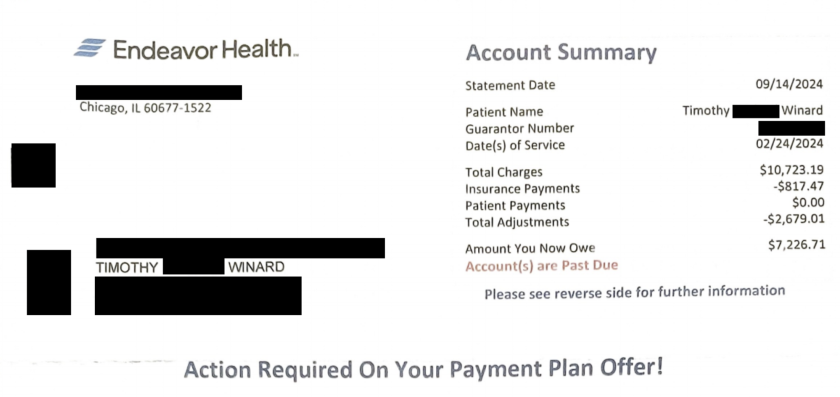
The procedure went well, and Winard went home right afterward. Then came the bill. It totaled $10,723.19, including $1,436 for the anesthesia and $1,039 for the recovery room. After an insurance discount, his plan paid $817.47. Winard was left owing $7,226.71.
The Billing Problem
Short-term, limited-duration insurance policies don’t have to follow rules established under the ACA because they are intended to be only temporary coverage. As Winard experienced, benefits within the plans can vary, with some setting specific dollar caps on certain types of medical care — sometimes far below what it costs. What’s covered can be hard to parse, and the insurer generally gets the last word on interpreting its rules.
The Resolution
In December, Winard hired an advocate, Linda Michelson, to help him parse his bill. They wrote to the hospital, offering to pay $4,000 if it would settle the entire bill — an amount Michelson says is about four times what Medicare would pay for a colonoscopy. Winard says the hospital declined the offer. Shortly after Wood’s comment, Winard says he was contacted by his insurer and that a representative told him that, upon reconsideration, the bill had been adjusted — though he was given no specific explanation why. His new bill showed he owed only $770.
Takeaway
Short-term plans can be appealing for some people because of the relatively low cost of their premiums, but consumers should read all of the plan documents carefully before enrolling. Understand that the plans often won’t cover a full range of benefits, and check to see which services are covered and which are excluded. Check whether a policy includes per-day or per-policy-period dollar caps on coverage or other payout limits.
Conclusion
The experience of Tim Winard highlights the importance of carefully understanding the terms and limitations of health insurance plans, especially short-term policies that might not offer the same level of coverage as Affordable Care Act plans. It also underscores the value of seeking professional help when navigating complex medical billing issues. By being informed and proactive, individuals can better protect themselves from unexpected medical expenses.
FAQs
- Q: What is the main difference between short-term insurance policies and ACA plans?
- A: Short-term policies are designed to provide temporary coverage and often have more limited benefits and higher out-of-pocket costs compared to ACA plans.
- Q: How can I protect myself from unexpected medical bills if I have a short-term insurance policy?
- A: Carefully review your policy documents, understand what is covered and what is excluded, and consider seeking professional advice if you are unsure about any aspects of your coverage.
- Q: What should I do if I receive a surprising medical bill?
- A: Contact your insurance provider to understand their reasoning, and consider hiring a medical billing advocate to help negotiate the bill on your behalf.
- Q: Are short-term insurance policies always cheaper than ACA plans?
- A: While premiums for short-term policies might be lower, the overall cost, including out-of-pocket expenses for uncovered services, could be higher than for an ACA plan, especially for those who qualify for subsidies.

